Roofing services
Roof cleaning in Wisbech and moss removal
Roof cleaning in Wisbech is worth doing on a minority of roofs, sold to a great many more, and capable of turning a cosmetic problem into a structural one when it is done with a pressure washer.
The short answer
Most roofs in and around the town do not need cleaning, and almost none of them need it every year. Moss on a sound roof is a cosmetic issue far more often than a technical one, and an industry that sells roof cleaning has an obvious interest in you believing otherwise.
There is a real case for it in specific circumstances though, and dismissing it entirely is its own mistake. The honest position is that roof cleaning is a maintenance job with a narrow set of genuine justifications and a wide set of invented ones.
When it genuinely helps
- The gutters are filling with it. Moss breaks away, washes down and blocks gutters and downpipes, and a blocked gutter above a wall that already takes driving rain does genuine damage. Of every reason on this list, this is the strongest.
- Moss is bridging a valley. Water backing up in a valley gutter goes sideways under the covering.
- Heavy growth on porous concrete tile. Moss holds water against the surface, and water in a porous tile plus a hard frost spalls it. On tiles that have already lost their coating the freeze thaw argument is real.
- Debris building up in the channel of a pantile. The deep channel of an S profile collects leaf litter and grit, and enough of it holds water in the part of the tile that is supposed to be carrying water away.
- Growth lifting the tail of a tile. Enough of it breaks the seat of a tile against the course below, which on an exposed roof is a wind problem as much as a water one.
- The house is going on the market looking uncared for. Nothing technical about it, but it is a fair reason.
When it is being sold to you
- A light green film on sound tiles. That is algae and it is doing nothing at all
- Anybody who mentioned it after knocking at your door, because nobody surveys a roof from the pavement
- Cleaning offered as a way to extend the life of a roof that is at the end of it anyway. It will not
- An annual cleaning contract, because roofs do not need cleaning annually
- Cleaning bundled with a coating or a sealing treatment, which is the part to worry about
Why moss picks its side of a Wisbech roof
The Fens are low lying and damp, and damp is half of what moss needs. The other half is shade and a surface rough enough to hold on to.
What is interesting locally is that exposure cuts both ways. A slope with wind across it dries quickly, so on a lot of houses here the weather facing side stays comparatively clean while the sheltered slope, the lee of a chimney stack, the shadow of a dormer and the bottom courses just above the gutter carry nearly all of the growth. Heavy moss on one slope and next to none on the other is normal, and it is telling you about aspect rather than about neglect.
Surface texture explains the rest. Concrete interlocking tile is manufactured with a coloured coating. Once that has weathered off, the concrete underneath is porous and rough and moss grips it easily, which is why old concrete roofs look far mossier than clay or slate roofs in identical conditions. Clay pantiles are denser and smoother and generally stay cleaner, but that deep channel down the profile collects debris, and debris holds moisture and feeds growth.
Overhanging trees make all of it worse, by shading the roof and by dropping the material that feeds the growth, so cutting a branch back is often a more permanent answer than cleaning the roof and it is cheaper. Heavy moss on an older concrete roof is also telling you something else worth knowing: the tile surface has gone, which is real information about where that roof is in its life. See new roofs and re-roofing for what that does and does not mean, and tiling and slating for how the different coverings behave.
How a clean damages a roof
This is the part that matters, because a badly cleaned roof is in worse condition than a mossy one and the damage is not always obvious straight away.
Pressure washing
A high pressure lance is the fast, cheap way to strip moss off and it is the most damaging thing routinely done to domestic roofs. On concrete tile it blasts away whatever surface coating is left and exposes the aggregate, so within a couple of years the tile is more porous and mossier than it was to begin with. It forces water up under the laps into the roof space. It snaps nibs off tiles and shifts the ones it does not snap.
There is a specific reason to be firmer about this here than a national guide would be. On an exposed roof what keeps the covering in place is the fixing regime and, on older roofs, the mortar at the ridge and the verge. A pressure washer strips tired mortar out of ridge and verge bedding extremely efficiently. Somebody can arrive to clean your roof, leave it looking tidier, and leave the edges of it measurably less secure going into winter.
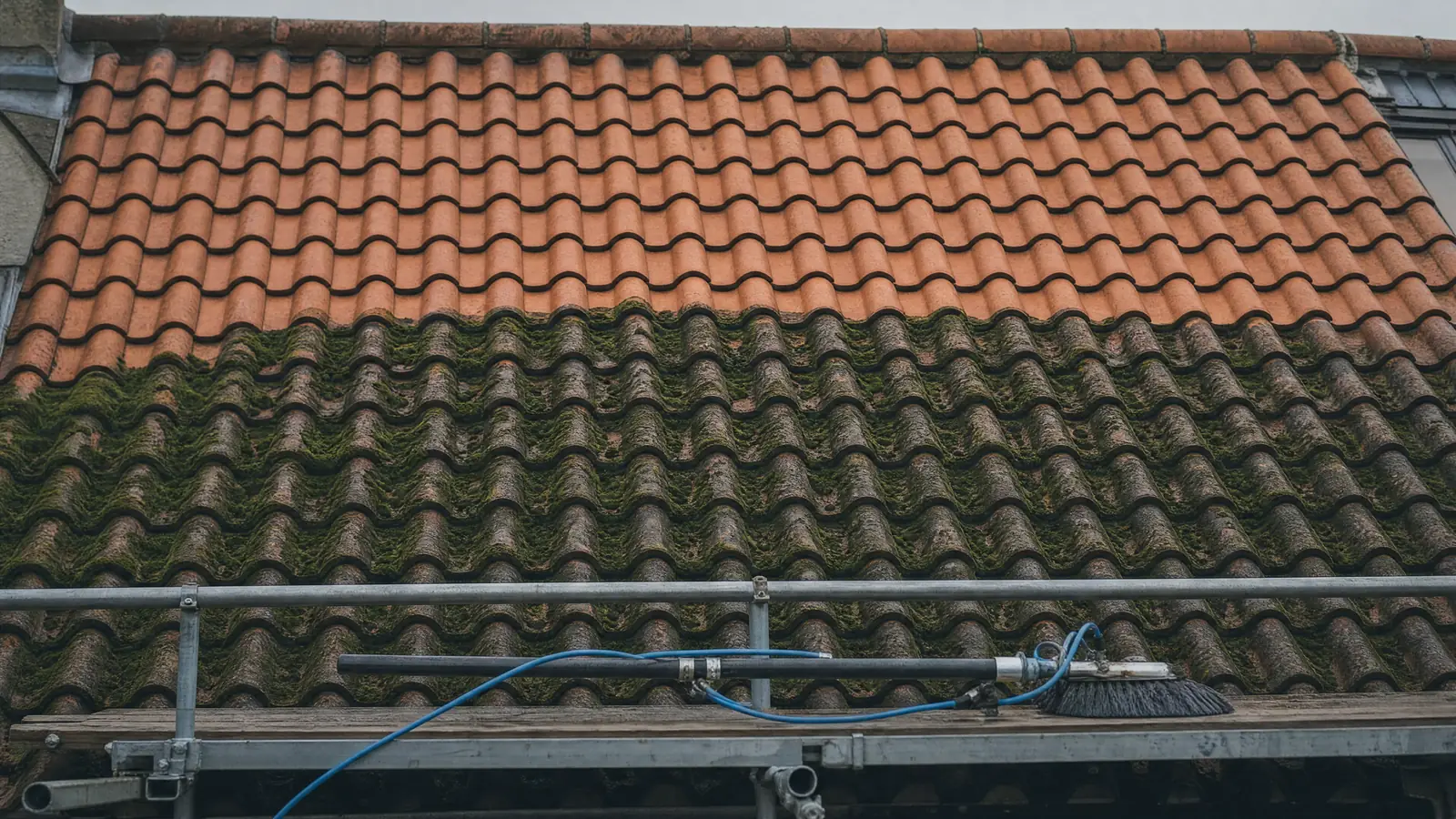
On natural slate the same lance is worse, and on the old clay pantiles of a period building it has no business leaving the van. Anyone whose sales pitch starts with jet washing can be turned down on that basis alone. What you want is hand work: a scraper and a stiff brush, worked from the ridge downwards so material travels the way water does, and then every bit of it cleared out of the gutters.
Roof coatings and sealants
The sale that gets made once the scaffold is already up. A pigmented coating sprayed across the tiles and sold as restoring, sealing and adding years to the roof, generally with an impressive guarantee attached.
It repairs nothing. Every component that actually fails, underlay, battens, nails, mortar, lies beneath the tiles where a surface coating cannot reach it. Coatings can also hold moisture inside a porous tile and get in the way of how the roof breathes. On a period or listed roof they are worse than useless, because they prevent units being lifted and reused and they are precisely the sort of alteration a conservation officer would want to have been consulted on. A sound roof does not need one; an unsound roof is not made sound by one.
Spray foam
Not a cleaning product, but it comes down the same sales channels and it earns the same warning. Foam sprayed onto the underside of a roof has caused homeowners real trouble with surveyors and mortgage lenders, it buries the timber so nobody can inspect it, and on a traditional roof it disrupts the ventilation the structure was built to rely on. If it is offered as the answer to a roof problem, say no.
What a proper clean is
- An inspection first. Broken tiles, failed mortar and loose ridges get identified before anybody starts scraping, because cleaning will otherwise find them the hard way.
- Safe access. Scaffold, a tower, or roof ladders and harnesses. Anybody standing directly on the tiles is breaking them.
- Mechanical removal by hand. Scraper and stiff brush, working from the ridge down so material travels with gravity rather than being forced up under the laps.
- Clear the gutters, downpipes and valleys. All of it has just been scraped off the roof and into them. Skip this step and the clean has manufactured a blockage rather than prevented one.
- Check the ridge and verge afterwards. On an exposed roof this is not optional. Scraping finds tired mortar, and anything loosened needs re-bedding and fixing before the next blow rather than after it.
- Biocide treatment. Sprayed on to kill what is left behind and slow the regrowth. Without it you are buying a clean that lasts a season instead of years.
- Then leave it alone. Biocide works over months. The residual staining weathers off gradually rather than disappearing on the day, and anybody promising an instant transformation is planning to use a pressure washer.
What to expect afterwards
A properly cleaned and treated roof should stay acceptable for something like four to six years before it needs looking at again, depending on shade, trees and which way the slope faces.
It will not come up looking new. A weathered concrete tile stays a weathered concrete tile, and the only thing that alters that is re-covering the roof.
Roof cleaning guide prices in Wisbech
| Job | Guide range | What moves it |
|---|---|---|
| Roof clean and moss removal | £400 to £1,100 | Area, how deep the growth is, and whether gutters are done too |
| Biocide treatment only, no scraping | £250 to £600 | Area and access. Only suitable where the growth is light |
| Clear and flush gutters at the same time | £60 to £140 | Cheaper as an add-on than as a separate visit |
| Clear a blocked valley | £120 to £300 | Length, access, and how compacted the debris is |
| Re-bed ridge or verge mortar loosened by cleaning | £300 to £900 | Run length and access. Worth pricing before the clean, not after |
| Scaffold, where a tower will not reach | £500 to £1,200 | Frequently the largest single line, and shared if other work is bundled |
Guides only, not quotes. Coating and sealing treatments are left off this table on purpose, for the reasons given above. See the full Wisbech cost table and, if the roof is leaking rather than dirty, the roof repair cost guide.
Frequently asked questions
Occasionally, and far less often than the people selling the clean suggest. The genuine risks are three: moss washing down into gutters and valleys, moss trapping water against a porous tile so frost can blow the surface off, and growth thick enough to lift a tile off its seat.
A thin green film on sound tiles is algae, and it does nothing whatsoever. Deep moss on old porous concrete on a sheltered slope is worth acting on.
Because the side the weather hits dries out quickly and the sheltered side does not. On an open site that contrast is more pronounced than it would be in a built-up street.
It is normal and it is about aspect rather than neglect. The growth also concentrates in the lee of a chimney stack, under a dormer and in the bottom courses just above the gutter.
Guide figures for July 2026, including VAT: £400 to £1,100 to clean and de-moss an ordinary house, or £250 to £600 for biocide on its own where the growth is light.
Scaffold, where a tower will not reach, adds £500 to £1,200 and is often the biggest single item, which is a strong argument for combining a clean with any other roof work.
No. It strips the surface coating off concrete tiles and leaves them more porous and mossier within a couple of years, it forces water under the laps into the roof space, and it breaks tile nibs.
There is a local reason to be firmer still: a lance strips tired mortar out of ridge and verge bedding, and on an exposed roof those are the details holding the covering down. Scraping and brushing by hand, then a biocide, is how it should be done.
Most never do. Where there is a real case for it, a proper clean followed by a biocide should hold for something like four to six years.
A firm pushing an annual contract is selling you a frequency nothing on your roof requires. Clearing the gutters every year, by contrast, is time and money well spent.
Almost never. Everything that fails on a roof, the underlay, the battens, the nails and the mortar, sits below the tiles where nothing sprayed on top can reach it.
Coatings can also hold moisture inside a porous tile, and on a period or listed roof they stop units being lifted and reused, which turns a maintainable roof into a liability. Sound roofs do not need one and unsound roofs are not repaired by one.
No. A clean deals with what is growing on the surface. Leaks come from failed flashings, tiles that have slipped or lifted, perished underlay and defects in the stack, and a clean touches none of them.
If water is getting in, begin with the roof leaks guide and roof repairs. All a clean achieves on a leaking roof is a tidier leaking roof.
Get quotes from Wisbech roofers
Tell us your postcode and what needs doing. We pass it to vetted roofing firms covering that part of Wisbech, and they come back to you directly with quotes.
- Takes about a minute
- No cost to you, ever
- You choose who to speak to, and you can say no to all of them
Compare Wisbech roofers
Answer four questions. We pass your job to vetted roofers who cover your postcode, and they come back to you with quotes. No charge, no obligation.
We pass your details only to roofing firms that cover your postcode, so they can quote. We never sell your details on for other purposes. See our privacy notice.
Find out what your roof should cost
Compare quotes from vetted Wisbech roofers, or call us and we will point you at the right sort of firm for the job.