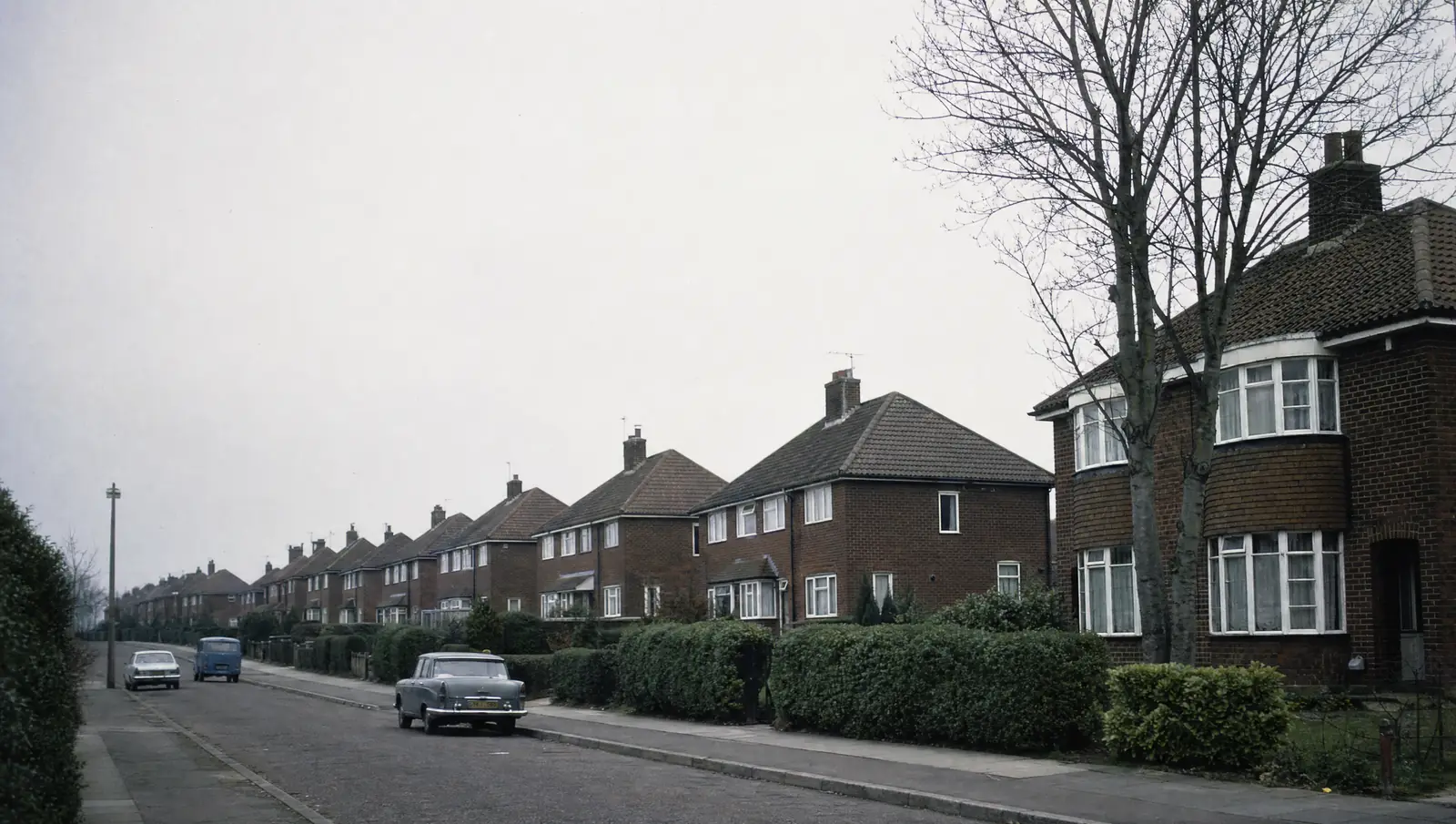
Areas · Waterlees and Clarkson
Roofers in Waterlees and Clarkson, Wisbech
Two of the ten town council wards, and the everyday end of the market: roofers in Waterlees and Clarkson, Wisbech are pricing ordinary repair-or-replace jobs where the constraints are practical rather than legal.
An ordinary roofing market a short walk from a protected one
Waterlees and Clarkson are two of the ten wards of Wisbech Town Council, alongside Claremont, Clarence, Medworth, Octavia Hill, Peckover East and West, Walsoken and Wisbech North.
We are not going to tell you what the housing here is made of or when it was built, because we have not sourced it, and a roofing site that invents an estate name to fill a paragraph is not worth reading. What we can be useful about is what decides the job on an ordinary Wisbech house.
- Whether the covering has outlived what surrounds it. Tiles and slates rarely fail first. Fixings, underlay, mortar and flashings do.
- How exposed the roof is. Wisbech sits on flat open fen, so wind loading at the edges is harder than national averages assume.
- Whether the address is inside the conservation area boundary. Wisbech's conservation area covers the whole historic core, so being near it and being in it are different things.
That third one is why this page exists. It costs nothing to settle, and it is the most useful homework available to anyone living close to the historic core without being in it.
How to establish whether your own address is in the conservation area
No cost, an afternoon at most, and it changes what you are buying. Do it before you ask for prices.
1. Go to Fenland District Council, the planning authority
Not the county council and not the town council. Fenland publishes its 10 conservation areas, and for this one it has published an appraisal and a management plan. A roofer's view on the boundary is an opinion. The council's map is the answer.
2. Find the building, not the ward or the postcode
Designation follows a drawn line around the historic core, not a ward, a street or a postcode sector, and it can run down the middle of a road.
3. Treat listing as a separate question
A building can be listed whether or not it sits in a conservation area, and listing is recorded nationally. Listed building consent covers the whole building, which makes it the worse of the two to discover late.
4. If you are near the line, put it in writing
Borderline addresses are where mistakes happen. Email planning, describe the work, and keep the reply. A written answer beats a confident verbal one from anybody, including us.
5. Give the answer to every firm you ask to quote
Otherwise you compare a quote that priced a compliant job against one that ignored the question, and the cheaper number is not the better deal.
Guide prices for the jobs people here actually buy
| Job | Typical guide range | What moves it here |
|---|---|---|
| Replace a few slipped tiles | £150 to £350 | Access, and whether a tower or ladder reaches it safely |
| Repoint or replace ridge tiles | £450 to £1,200 | Ridge length, and whether mortar or a fixed system goes back |
| Replace lead flashing to a chimney | £350 to £850 | Stack height, scaffold, brickwork condition |
| Full re-roof, terraced house | £5,500 to £9,500 | Covering, roof size, scaffold, what is found on strip |
| Full re-roof, semi-detached | £7,000 to £13,000 | As above, plus dormers, valleys and bundled chimney |
| Flat roof, single garage, EPDM | £1,600 to £3,000 | Deck condition, insulation upgrade, edge detailing |
| Fascias, soffits and gutters, semi | £1,800 to £3,800 | Run length, and the roof edge behind them |
Ranges assume an unlisted building outside a conservation area. See roofing costs, new roof cost and roof repair cost.
Repair or replace, decided without a crystal ball
The wrong test is the age of the roof. The right one is whether the failures are related.
- Add up five years of roofing spend. If it approaches the cost of the job that would end the problem, you are already paying for that job, slowly.
- Count the unrelated failures. One slipped tile is weather. Three problems in three years is a pattern.
- Look in the loft on a bright day. Sagging or torn underlay is one of the clearest end-of-life signals there is.
- Ask whether the roof can still be walked. If tiles break underfoot, patching is finished.
- Ask what else is at the same stage. Ridge, verge, flashings, gutters and fascias arrive at the end together.
Bundle to the scaffold, not to the calendar
On most roofing jobs the largest fixed cost is access. If a scaffold is going up anyway, that is the moment for the chimney flashing, gutters and fascias, because doing them next year means paying twice. Ask for the extras itemised.
Making three quotes actually comparable
The usual reason quotes look wildly different is that they are not pricing the same job. Write the brief yourself: what is on the roof now, repair or replace, and what you established about the boundary. Then ask everyone the same four questions. What covering, and who makes it. How are the ridge and verges fixed. What happens if rot is found, and at what rate. What is excluded.
Flat open land means wind gets under the edges of a roof rather than pressing evenly on it, so ridge, verge and eaves detailing matters more here than national advice suggests. After a gale, storm damage covers the first hour, and roof leaks explains why the damp patch is rarely under the defect.
For real numbers, compare quotes. The work is on roof repairs and new roofs. Inside the historic core, read the Brinks and town centre; on the town edge, Walsoken.
Frequently asked questions
We are not going to answer that for you, because the honest answer depends on the individual address rather than the ward. The conservation area is a boundary drawn around the historic core, and wards are a different kind of line. The five steps above get you a definitive answer.
On an unlisted house outside a conservation area, usually not, because a like-for-like recovering normally falls within permitted development, though building regulations still apply. If you are changing the material or the roof line, or the building is listed, that changes.
It is, and it is the cheapest roofing job you will ever buy compared with what it prevents. Water sitting at a blocked eaves rots the timber behind the fascia and then the rafter ends. See guttering, fascias and soffits.
Not automatically. A quote well below the guide range is as much of a warning as one well above it, and it usually means something is missing: scaffold, waste disposal, underlay, or a timber allowance. Compare line by line rather than totals.
Concrete interlocking tile is commonly quoted at 40 to 60 years, clay longer, natural slate longer again. In practice the covering outlasts what surrounds it. On an exposed fen site the early casualties are what the wind works on: mortar bedding, fixings and eaves underlay.
Usually yes, if the roof is at an age where you have started wondering, because the cheapest version of every roofing problem is the one dealt with before it gets inside. Ask for a written condition report, not a verbal opinion at the door.
Get quotes from Wisbech roofers
Tell us your postcode and what needs doing. We pass it to vetted roofing firms covering that part of Wisbech, and they come back to you directly with quotes.
- Takes about a minute
- No cost to you, ever
- You choose who to speak to, and you can say no to all of them
Compare Wisbech roofers
Answer four questions. We pass your job to vetted roofers who cover your postcode, and they come back to you with quotes. No charge, no obligation.
We pass your details only to roofing firms that cover your postcode, so they can quote. We never sell your details on for other purposes. See our privacy notice.
Find out what your roof should cost
Compare quotes from vetted Wisbech roofers, or call us and we will point you at the right sort of firm for the job.